Showing posts with label stars. Show all posts

Tuesday, December 15, 2015

How Security Cameras Work- Presented by Dennis Mancino of HD view 360


Do you ever feel a slight pang of anxiety when you leave your house? After locking the door, do you walk away backwards, unwilling to tear your protective gaze away? Instead of reluctantly easing into your car, do you eventually give up, running back to your house to stand guard over your property?
Unfortunately, for those worried about security, it's impossible to be in two places at once. We can't make a trip to the grocery store and expect to know exactly what's going on in every nook and cranny of our homes. We can install locks and alarm systems (which, incidentally, have driven down the number of burglaries over the years), but nothing is failsafe.

If you want to be able to actually see what happens while you're away, security cameras may calm your nerves. Video surveillance allows you to monitor or record activity in and around an area for many different reasons. For example, parents might want to watch over a sleeping child and lessen the risk of a dangerous fall from the crib. But a security camera system around the house can see people who approach the front door and maybe even catch a criminal in the act of breaking in.
­

There's a wide variety of security cameras available. Some are large and out in the open, and might serve simply to deter criminals from even approaching a home, while others are tiny and meant to stay hidden from view. If you're considering setting up some type of video surveillance system in or around your home, there are a lot of questions to ask yourself before getting started. To learn about the different types of security cameras out there and which systems are best for certain situations, see below.


Types of Security Cameras

­Before you actually invest in a security camera system, you need to think about what you'll be watching and what you need in order to watch it. The number of cameras you want is probably the first question that should come to mind. Are you focusing on one room in the house, or do you need to keep an eye on several different parts of the house? Will you need to monitor outdoor activity as well as indoor? If you're simply watching over one room, you'll probably need just one camera, but including more areas requires a bigger camera system.

Security cameras are either wired or wireless, and which setup you'll need depends on where you'll want to put the cameras and how visible you want them to be. Wired cameras might be trickier to install, and stray wires can hamper your attempts to be discreet. They do, however, have a typically higher-quality picture than wireless cameras, since their signals aren't traveling through the air.
Wireless cameras have more flexibility, but broadcasts from other devices such as wireless Internet, cordless phones and baby monitors -- can interrupt a wireless camera's signal. Also, keep in mind that if you decide on a wireless system, there's a possibility your video feeds could be intercepted by others. Having someone else monitor your activity around the house or finding out whether or not you're at home defeats the purpose of having security cameras. If you're worried about your personal security, you can check with the manufacturer to see whether or not they encrypt their wireless system.

Larger cameras will be visible, and people typically install them outside or in an area where people know they're under video surveillance. You can also find smaller, hidden cameras online in many different forms -- a tiny camera hidden inside of an alarm clock, for instance, or a small pinhole camera that fits inside of an intercom system.

But before you install any type of security system into your home -- especially the small, "hidden" type -- you should note the legal restrictions on video surveillance. In most states, anyone recording either audio or video in a specified area needs to alert anyone in range of the surveillance device that he or she is being recorded. For instance, if you record someone's telephone conversation without them knowing it, that's illegal. It's also true that if you install a tiny camera into a room in your house without letting anyone know it's there, you're technically breaking the law. If anyone found the camera and wasn't previously aware of its existence, you could potentially face charges.


Installing Security Cameras

­After you've determined the area or areas which will undergo surveillance, it's important to set up the security system properly. A poor installation won't get you any results, and if you've never had any experience with electronics, it would be best to have a professional handle the job. Any legitimate security service that offers camera surveillance will probably offer installation, and if they're credible they'll also make sure your system is not only working but legal.
Many camera systems are uncomplicated, so you may be able to install the equipment yourself. Installation procedures will vary according to the model, so it's a good idea to stick to the instructions.

Where you place the camera lens is important. The distance of the camera from its subject should be carefully considered, making sure the right areas are in focus and clearly visible. If you mount a camera to a wall or structure, make sure it's mounted properly so the camera won't shake and distort the picture. Outdoor cameras can deter criminals from ever attempting a break-in, and they can cover large areas, but a camera placed outside should have an appropriate weatherproof casing to protect it from the elements. Tough casings can also prevent tampering or vandalism.

You should also determine whether or not you'll want to record your surveillance. If you're simply making sure your children are safe while playing or monitoring who comes to the front door, a direct video feed with no recorder should be sufficient. But if you wish to see what's happening in a particular area over long periods of time, you should connect a recording system that's compatible with your security cameras. Some people use VCRs to record video, while others run the whole system via a computer and save information digitally. To avoid wasting video, some surveillance systems have motion detectors that only begin recording once the device picks up movement within the area.

As you can see, there are many video surveillance options available. Choosing the right one for your personal needs is a matter of knowing how you want it to work for you.


HD View 360 is a Surveillance and Security company based in Miami, FL.  HD View 360 specializes in high end residential installations and commercial Franchise store installations and monitoring.

For more information on HD view 360 products and services visit: www.hdview360.com


source : http://electronics.howstuffworks.com/gadgets/home/security-cameras.htm

Wednesday, November 11, 2015

Attackers hijack CCTV cameras to launch DDoS attacks - Presented by Dennis Mancino HD View 360


IP cameras, like this one made by HD View 360, are widely used in the security industry.

Default and weak credentials on embedded devices can lead to botnets

We've reached a point that security researchers have long warned is coming: Insecure embedded devices connected to the Internet are routinely being hacked and used in attacks.
             active directory

The latest example is a distributed denial-of-service (DDoS) attack detected recently by security firm Imperva. It was a traditional HTTP flood aimed at overloading a resource on a cloud service, but the malicious requests came from surveillance cameras protecting businesses around the world instead of a typical computer botnet.

The attack peaked at 20,000 requests per second and originated from around 900 closed-circuit television (CCTV) cameras running embedded versions of Linux and the BusyBox toolkit, researchers from Imperva's Incapsula team said in a blog post Wednesday.

When analyzing one of the hijacked cameras that happened to be located in a store close to the team's office, the researchers found that it was infected with a variant of a known malware program designed for ARM versions of Linux that's known as Bashlite, Lightaidra or GayFgt.

While infecting computers with malware these days requires software exploits and social engineering, compromising the CCTV cameras that were used in this attack was very easy as they were all accessible over the Internet via Telnet or SSH with default or weak credentials.

Insecure out-of-the-box configurations are a common issue in the embedded device world and have been for a long time. In 2013, an anonymous researcher hijacked 420,000 Internet-accessible embedded devices that had default or no login passwords and used them in an experiment to map the whole Internet.

However, the problem is getting worse. The push by device manufacturers to connect things such as refrigerators or "smart" light bulbs to the Internet is largely done without consideration for security implications or an overhaul of outdated practices. As a result, the number of easily hackable embedded devices is growing fast.

Shortly after the CCTV camera-based attack was mitigated, a separate DDoS attack was detected that originated from a botnet of network-attached storage (NAS) devices, the Imperva researchers said. "And yes, you guessed it, those were also compromised by brute-force dictionary attacks."


sourced: http://www.computerworld.com/article/2996079/internet-of-things/attackers-hijack-cctv-cameras-to-launch-ddos-attacks.html

original article written By

Tuesday, November 3, 2015

Unprotected license plate surveillance cameras let anyone with a web browser tune in - Presented by Dennis Mancino HD view 360

Automated license plate recognition systems, also known as ALPR or simply LPR systems, have become increasingly popular — and controversial — tools for law enforcement in recent years. The systems can automatically photograph and record data on license plates in real time, drawing the ire of privacy advocates like those at the Electronic Frontier Foundation, which has just released information on security vulnerabilities in ALPR systems across the country.


"Earlier this year, EFF learned that more than a hundred ALPR cameras were exposed online, often with totally open Web pages accessible by anyone with a browser," the organization says in the new report released today.

The report focuses on systems sold by a company called PIPS Technology, which is now owned by 3M. According to the EFF, live feeds from some of the cameras were available to watch online, and "were individually connected to the internet and freely accessible online to anyone who knew where to look."

The organization described its testing approach:
The testing process involved confirming that a camera was online and responding to requests by connecting to it with a Web browser or by connecting to it over Telnet. If the camera had a password on both the Web and Telnet interface we left it alone, but if the camera was not protected with a password we were able to recover configuration information. However, when the Web was locked down, but Telnet was not, we [were] able to view password information in the Telnet configuration. Often these passwords were set to the default or were otherwise not sophisticated enough to be secure.

Using information embedded on the page and through publicly available sources, the EFF was able to identify the position of some of the cameras, and got in touch with the owners to highlight the vulnerabilities. Some, like local Louisiana law enforcement agencies and the University of Southern California, took steps to fix the vulnerabilities. But the city of Hialeah, Florida, stopped returning the organization's calls.

The ACLU has found that about three-quarters of law enforcement agencies were using similar systems in 2011, giving officers "hundreds of millions of data points" on drivers not accused of a crime.

 Dennis Mancino is the CEO of HD View 360 a Miami based Surveillance company focusing on B2B installations and service
This post was originally posted:
on


Tuesday, October 20, 2015

The Importance of IP Video Surveillance in Education- Dennis Mancino HD View 360


Network Video Can Help Schools Do More With Less


For the quality of the educational experience as well as the safety of the students, it’s important that schools view safety as the highest priority. Administrators need to closely examine the security options available to them in the video surveillance marketplace. They should begin with a thorough look at what network-based video technology can do in the community’s local educational facilities, compared to traditional analog systems.

Today, the industry is in the middle of a paradigm shift as it slowly gravitates from analog video systems to digital Internet protocol (IP). Use of IP-based video is on the rise, and nowhere else in society is this new flavor of video surveillance as well received.

According to Peter Boriskin, vice president of product management for Tyco International’s Access Control and Video Systems, IP’s current market share is roughly 15 percent.

Erron Spalsbury, account manager with 3xLogic, Westminster, Colo., said his company sees a growing interest in IP.
“About 80 percent of every DVR [digital video recorder] we sell records video from at least one IP camera,” Spalsbury said.

Use of network-based video
Since the 1950s, security companies have installed and serviced analog cameras in educational facilities as well as in commercial, industrial and retail markets. For the most part, analog technology has served the industry well, but since the introduction of computer networking in education, the number of IP video installations has more than doubled each year.

In a growing number of schools, colleges and universities, IP cameras allow officials to better track and identify suspicious individuals as they enter and leave facilities. IP cameras allow administrators to monitor parking lots, sidewalks and critical entrances with greater clarity and efficiency.

When real-time observation is not feasible, IP video allows images to be recorded on an assortment of digital media for later review. Network video offers the advantage of capturing real-time events as they happen and storing them on a computer hard drive. And because of megapixel imagers, IP video has the ability to record images in near-to-life resolution.
Because of their digital nature, images from an IP camera also can be easily exported for law enforcement use without degrading image quality. A watermark within the digital framework of each image verifies its authenticity. This is especially important when video images are removed as evidence to use in a court of law.

Megapixel IP cameras also allow schools to do more with fewer employees, which is important to cash-strapped institutions. Through the use of live and recorded video, the number of security personnel can often be reduced and replaced with IP video cameras. Instead of a school full of security officers, many educational facilities can effectively function with a handful.

Digital IP vs. analog cameras

An IP camera is designed to connect to a computer network or a recording device, such as a DVR, network video recorder, network attached storage or some other method of image retention. With an IP camera, this is accomplished using a Category 5e or 6 cable with eight-position modular plugs. An analog camera, in contrast, uses a coaxial cable plus a second cable for power.

IP cameras are assigned a unique address for identification purposes, which is also a feature that separates the technology from analog. This address enables the network to store images in separate folders corresponding to the specific cameras. IP addresses allow networks to associate specific information with each image, such as camera location, date, time, camera type, etc. This enables system operators to readily identify where a scene comes from inside or outside the facility.
In some cases, the network superimposes other data onto an image, such as cash register transaction information. Because it’s in a digital format, advanced searches can be conducted using any number of criteria. For a good example, consider the retail side of a college or university, such as a book store or cafeteria. Data from credit cards or other identification credentials can be used to locate a student in real time or through recorded video. Integration with other subsystems, such as access control, enables school officials to review an audit trail of student and staff member activities, reviewing images from nearby cameras in the process.

Another difference between IP and analog cameras is the format used to send image information over a wire. Conventional cameras use the National Television Standards Council (NTSC) standard, commonly referred to as composite video. A conventional video camera bundles everything needed to create an image within a single composite signal. This signal contains lumina (brightness/contrast) and chroma (image color) information as well as synchronization pulses for display scanning control. The typical bandwidth of a composite video signal is 6 MHz at 1 volt peak-to-peak. This is a lot of information that must be carried by the analog signal; therefore, a lot can be lost through electromagnetic interference.

Digital IP-based data is not as prone to outside interference as analog because it’s easier for the head-end system to detect the two voltage states of a digital data signal than the nearly infinite number of frequencies used in an analog signal. This makes digital IP more robust than analog, especially in locations experiencing a high-level of radio frequency interference, such as airports and industrial plants.

It is easier to place intelligence on the edge of the network using IP cameras than with analog. Software can be added to provide video analytics, e-mail and more. Some IP cameras have a built-in Web server, which adds a degree of redundancy to any video surveillance system. If something happens to the main method of image recording, relevant images may still exist.

Adding cameras to an existing infrastructure

Another advantage to using IP cameras is the relative ease with which they can be added to an existing local area network (LAN). Most educational facilities have a LAN installed throughout the buildings. This eliminates the need to install coaxial and power cables from one end of each building to the other, which must be done when installing analog cameras. Not only does this save time, but it also saves money because installers do not have to contend with the same amount of metallic cable.

“In this environment, where cost is a significant driver, being able to use the existing infrastructure allows us to reduce the installation cost to the customer,” Spalsbury said. “And not only is the wire (Category 5e) cheaper when it comes time to install a network, but it’s easier to pull. And it makes it easier and faster to expand when needed. In addition, IP technology makes it possible to record multiple facilities on the enterprise level and to do so using megapixel-type cameras.”

Not only do IP cameras use Category 5e or 6 cable, which is generally cheaper than coaxial, but sometimes the choice can be between installing a $700 megapixel camera with a 6-foot extension cord to a network’s wall outlet to get a robust, high-resolution picture or paying an installer $500 to run new coaxial cable the entire distance of a school for analog. IP video also allows for rapid deployment where there is an existing network, something educational facilities may need as security requirements change.

“An environment like that of a school is constantly changing and so will their need for covert and overt camera placement,” Boriskin said. “An IP video strategy allows for much easier camera movement.”

Balancing the need for IP video

Opponents of IP-based video cameras maintain that such a pie-in-the-sky approach to video surveillance is not worth the cost. Ask some information technology (IT) managers, and they may say attaching IP cameras to a school’s network isn’t practical because the cameras require a lot of bandwidth.

While it is true that not every school requires megapixel quality video, those that use one say you can’t have too much resolution when it comes to proving your case in court.

“The most compelling reason to use IP is the simplest one: don’t send 12 hours of an empty stairwell at 3 MB per second. Use the camera as a gate-keeper so only interesting video is sent,” Boriskin said.

In this case, when a camera is first installed, it will send a complete image of the stairwell. After that, only those pixels that have changed are sent to the head-end.

Although digital high-resolution cameras may not be ideal for every application, they are a potent new tool in the security expert’s bag of tricks.

Dennis Mancino is the CEO of HD View 360 located in Miami FL. for more information visit the website at www.hdview360.com

source: http://www.ecmag.com/section/miscellaneous/importance-ip-video-surveillance-education

Wednesday, October 7, 2015

The Importance of Proper Surveillance Camera Placement- Dennis Mancino HD view 360


 Below is a lesson in the Do's and Dont's of security camera placement. At HD View 360 you can trust us to make sure you don't violate the law. We pride ourselves on a professional installation each and every time and followup service that is prompt and available at any time.


Store says security cameras above fitting room not recording people changing


Store says security cameras above fitting room not recording people changing »Play Video
PORTLAND, Ore. – A woman told KATU she felt violated after spotting enclosed surveillance cameras above a fitting room at a local clothing store.
A manager of the store said the cameras were not pointed at the fitting room.
Corenna Khieu said she had just tried on a skirt when she looked up and saw the two cameras.
“Immediately, like, my heart just sank,” she said.
Khieu was with her 2-year-old daughter at the time.
"She's a baby,” Khieu said, “and I just thought, you know, who else is able to see this?"
The two were shopping at the Urban Kingdom clothing store on Northeast Martin Luther King Jr. Boulevard Monday afternoon.
"I only looked up just because I have a spider phobia,” said Khieu, “so I was just wanting to make sure no spider was gonna get on me."

After spotting the cameras she said she tried starting a conversation with a store employee.
"It seemed like the little things that I was saying to him about something else totally different, it wasn't like it was registering very well,” she said.

Khieu said she then went home, called the Portland Police Bureau’s non-emergency line, then contacted KATU.

We then shared her story with James Lee, one of the store's managers.
"I apologize if it caused a concern,” said Lee.

He and a store employee showed us surveillance footage from the cameras going back more than a week.

In the footage, the cameras are pointed away from the dressing rooms.

None of it shows people undressing.

Lee said the cameras are locked in with screws and very hard to move around.
When asked if he’d still consider moving the cameras, Lee said, “"I could if it needs to be … Maybe we could put a plate underneath it. Let them know there is no way the camera can go down into the dressing room. Maybe that might be an idea … I want customers to have zero doubt that camera can view inside the dressing room."

A spokesman for the Portland Police Bureau said they're not investigating the case.
He said, generally, recording someone who has their clothes off without their permission is a crime.

source http://www.katu.com/news/local/Store-says-security-cameras-near-fitting-room-not-recording-people-changing-330987252.html


Dennis Mancino is CEO of HD view 360 located in Miami,FL. HD view 360 services small businesses all over the United States and can handle any size job. Whether you need 1 store outfitted or 1000 we can handle the job and it will be done right the first time,

For More information visit our website at www.hdview360.com

Monday, October 5, 2015

WHAT IS 960H CCTV?? Dennis Mancino From HD View 360 Explains

What is 960H
This article explains what 960H video is and answers frequently asked questions about how 960H resolution is used in modern CCTV cameras and security DVRs.

What is 960H?

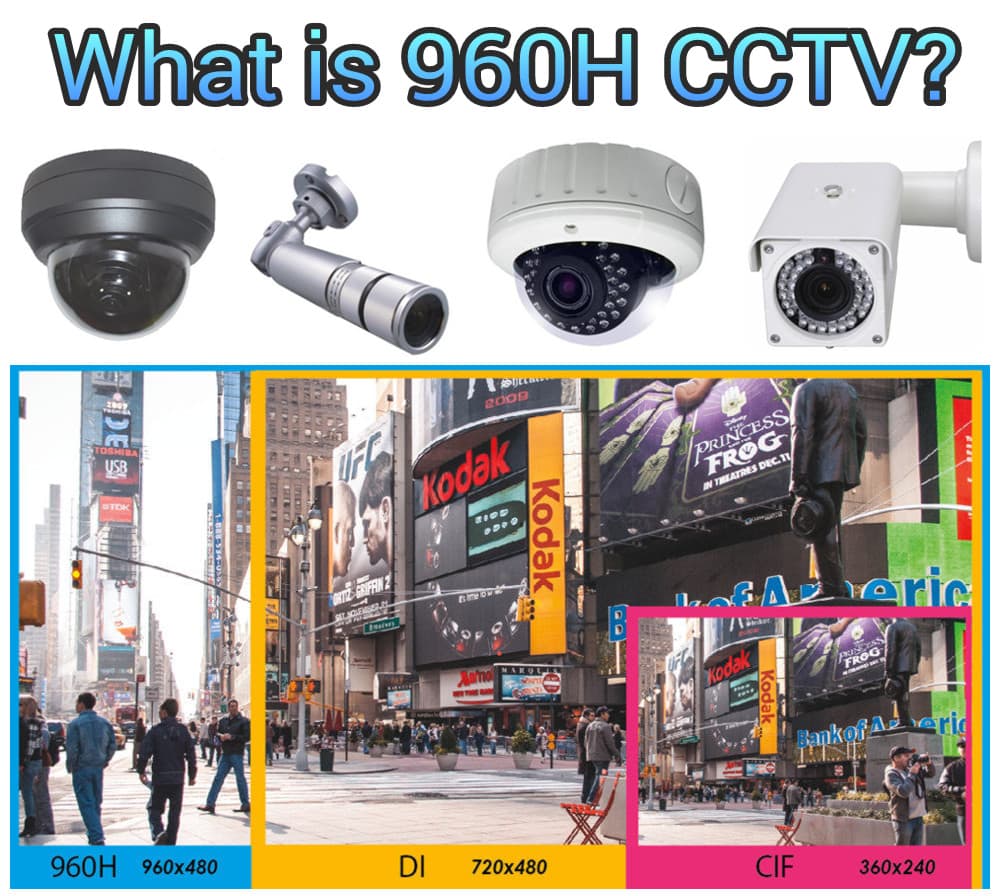
960H is the latest video resolution used by analog CCTV camera surveillance systems. The “H” in 960H stands for “horizontal” and 960 is the number of horizontal pixels in the video resolution. 960H is 960 x 480 video resolution. Unlike the generation of CCTV cameras and DVRs before 960H became a standard, 960H uses the 16:9 widescreen aspect ratio which makes it more suitable for use with modern widescreen format monitors and HDTVs. Almost all of modern monitors are 16:9 aspect ratio.

What resolution was used in CCTV before 960H?

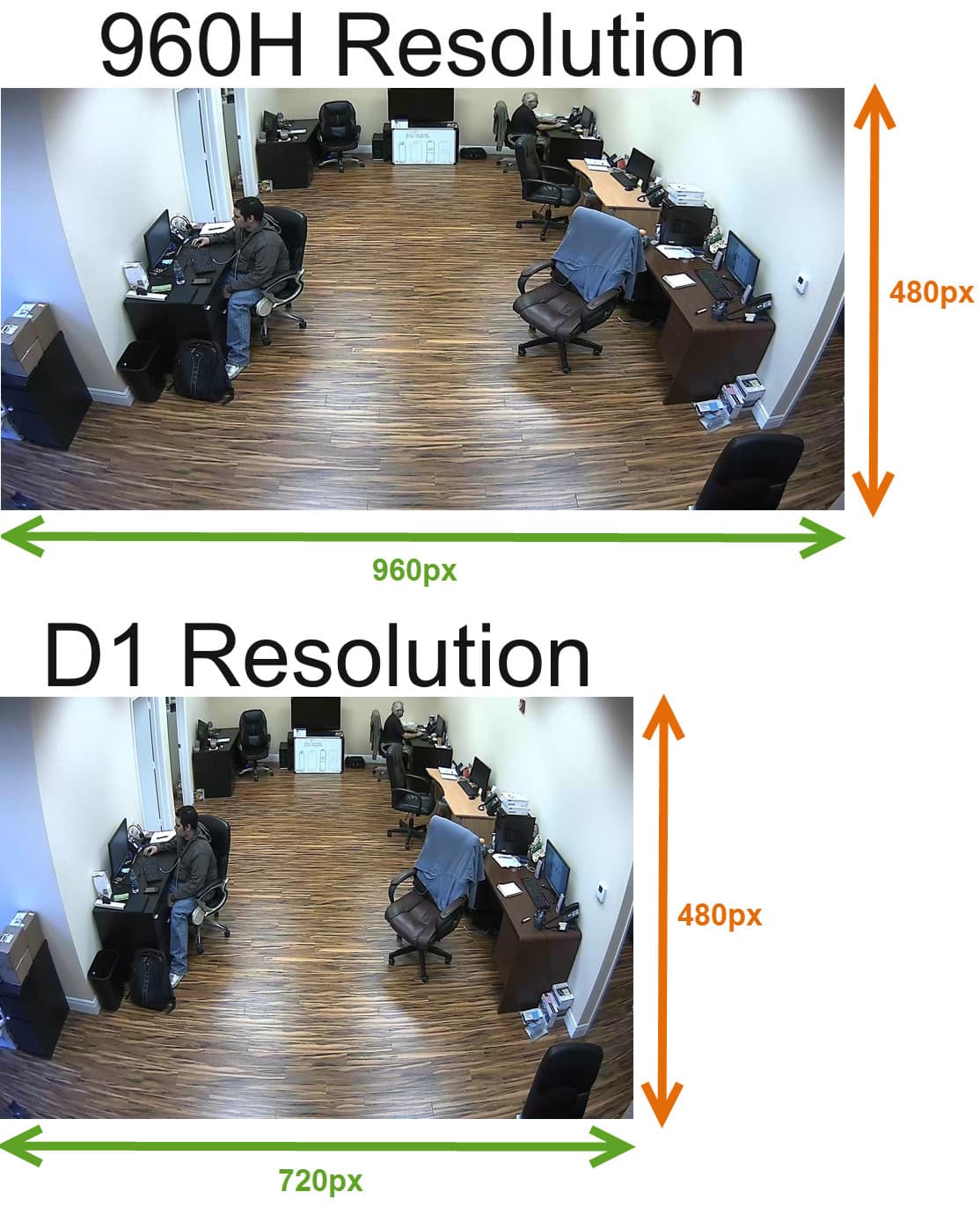
Before 960H cameras and DVRs were available, the most popular video standard for CCTV systems was D1 resolution. D1 resolution is 720 x 480 pixels, sometimes D1 is 704 x 480 pixels. Notice that the width of the picture is wider when comparing 960H to D1, but the height is the same. D1 resolution uses a 4:3 aspect ratio which was much more popular 10 years ago, before the advent of widescreen monitors and high def television. CIF resolution (also shown in the top image on this page) is 360 x 240 (sometime 352 x 240). It is basically half the size of D1 and also uses the 4:3 aspect ratio. CIF resolution is typically used when bandwidth or recording hard drive space is limited.

960H vs D1

The below images compare 960H vs D1 video resolution. Please click on the image for a full sized view.
960H vs D1

Do 960H cameras provide more video coverage than D1 cameras?

No. The angle of view / view-able area covered by a security camera is determined by the size of the lens and the size of the image sensor (the electronic chip that actually captures the image). Almost all CCTV cameras use a 1/3 inch image sensor. This includes 960H and D1 format cameras. Lens sizes do vary. In the above images, a 3.6mm lens was used. Notice that although the 960H image is wider than the D1 image, the angle of view is the same. The wider format image does not mean that a wider angle of view is captured. It just means that more pixels were used and the picture is wider.

How do I know if a CCTV camera is 960H resolution?

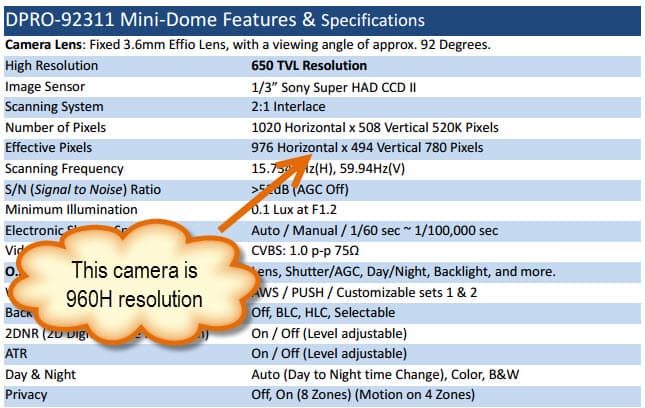
It is easy to confirm if a CCTV camera is 960H resolution by looking at the technical specification of the camera. Typically, there is a section in camera spec that documents the effective resolution of the camera in pixels. If the resolution width is 960 pixels or greater and the height is 480 pixels or greater, the camera is 960H. Below is a snapshot taken from the specification of a 960H camera.
960H CCTV camera
Most CCTV cameras that are 960H resolution are 650 TVL or greater. TVL stands for television lines and is a another way to measure the resolution of analog cameras. You should not assume that all 650TVL or 700TVL cameras are 960H. In some cases, the image sensor of a 700TVL camera is not actually capable of capturing 960 x 480 pixels. You should always go by the effective pixels on the camera’s spec.

How can I use the new 960H format?

In order to full take advantage of the 960H format in video surveillance applications, you should use both a 960H camera and a 960H DVR.
4 camera view 960H CCTV DVR
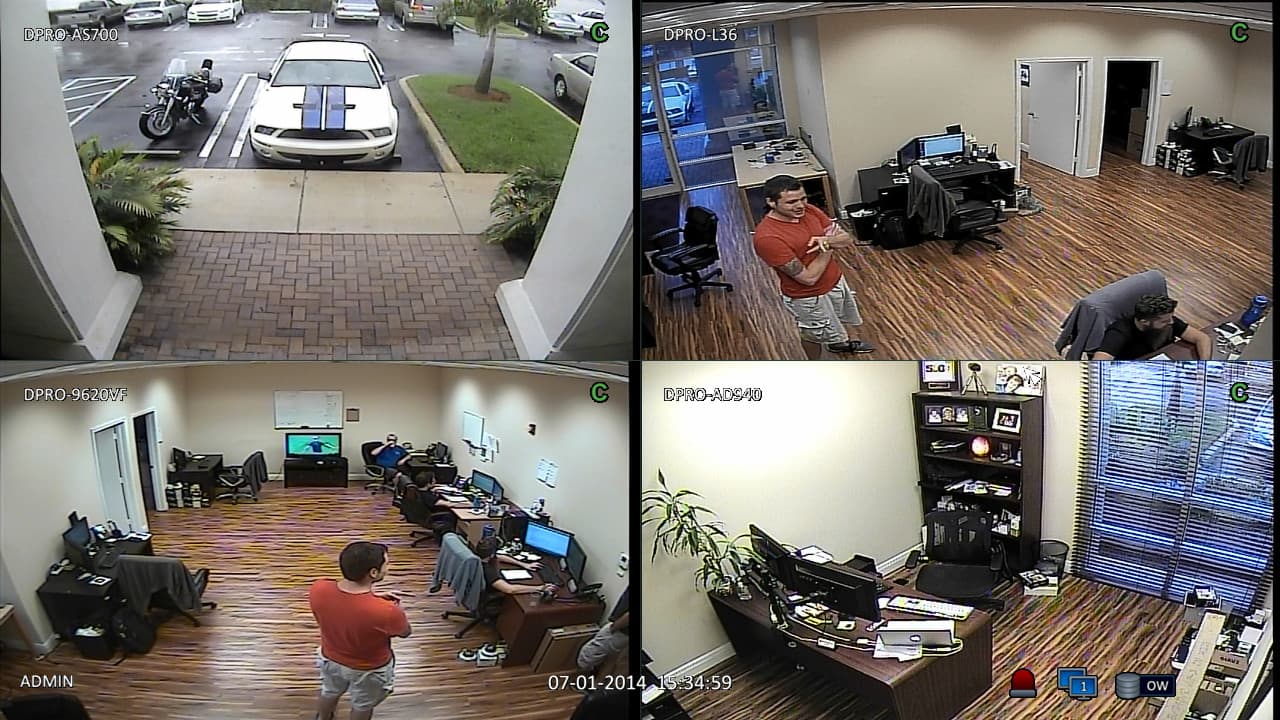
The above picture is a screenshot taken from an iDVR-PRO4A DVR (supports 960H video format) connected to 4 960H cameras. This is what the user sees from a monitor connected directly to the DVR’s VGA or HDMI video output. The DVR actually supports full 1080p monitor resolution, but unfortunately the video capture card that we used to grab this image only supports 720p resolution. Please click on the image for a full size view.

Can I use 960H cameras with a D1 DVR?

Yes. Actually, 960H resolution cameras were available in the market before 960H DVRs were available. CCTV camera resolutions seem to always advance before DVR resolutions catch up. When you use a 960H camera with a D1 resolution DVR, the image is simply compressed by the DVR to fit the maximum resolution that the DVR supports. No view of the image is lost. The image as a whole is just shrunken down to fit. It makes sense for customers shopping for new CCTV cameras to purchase 960H cameras even if they do not plan on updating their DVR to 960H right now. When the time comes to replace their DVR, they will already have cameras that take advantage of the wider format resolution.

Can I use my older non-960H cameras with a 960H DVR?

Yes. This is also a typical scenario. Many customers have existing CCTV cameras that are not 960H but provide a perfectly good picture that they are happy with. D1 / 4:3 apect ratio CCTV cameras will work fine with 960H DVRs. The DVR simply stretches the width of the image to fit the 960H resolution. This stretch is not drastic and most people do not even notice. 960H DVRs are backward compatible with non-960H cameras.

Do 960H and D1 cameras use the same cable?

Yes, the same coax cable (typically RG59) is used for both 960H and D1 CCTV cameras. The same BNC video connectors are also used. The only differece is the size of the image that they capture. All of the same wiring can be used.

How does 960H compare to HD CCTV (HD-SDI)?

Although 960H cameras and HD-SDI cameras use the same type of coaxial cable (RG59 or RG6), they are two very different technologies. HD-SDI is a digital video signal and can support much higher resolutions than analog CCTV. HD-SDI cameras require HD-SDI recorders and support full 1080p video resolution.

Request a 960H System Demo

Would you like to login to an 960H surveillance system from iPhone, iPad, Android, Windows or Mac to experience 960H video surveillance for yourself? Please click here to request a demo login.
request a demo
Mac Compatible CCTV Security Camera DVR

What is AHD CCTV?

Update! Since this article was first written, AHD CCTV has been introduced. AHD is an HD security camera standard that allows 720p and 1080p video to transmit using the same RG59 coax cable as 960H CCTV cameras. If you are interested, you can learn more about AHD CCTV here. On that page, we have a video demonstration that compares 960H vs 720p AHD surveillance video


Dennis Mancino Is CEO of HD View 360, a surveillance and IT company form Miami, FL.

For more information please visit www.hdview360.com

source for article: http://videos.cctvcamerapros.com/surveillance-systems/what-is-960h-video.html

Tuesday, September 8, 2015

Surveillance Society: New High-Tech Cameras Are Watching You - Dennis Mancino


In the era of computer-controlled surveillance, your every move could be captured by cameras, whether you're shopping in the grocery store or driving on the freeway. Proponents say it will keep us safe, but at what cost?

A dome camera in Lyon, France. Intelligent surveillance networks are commonplace in European cities. Now,  many American municipalities are building similar systems.
 
The ferry arrived, the gangway went down and 7-year-old Emma Powell rushed toward the Statue of Liberty. She climbed onto the grass around the star-shaped foundation. She put on a green foam crown with seven protruding rays. Turning so that her body was oriented just like Lady Liberty's, Emma extended her right arm skyward with an imaginary torch. I snapped a picture. Then I took my niece's hand, and we went off to buy some pretzels.

Other people were taking pictures, too, and not just the other tourists—Liberty Island, name notwithstanding, is one of the most heavily surveilled places in America. Dozens of cameras record hundreds of hours of video daily, a volume that strains the monitoring capability of guards. The National Park Service has enlisted extra help, and as Emma and I strolled around, we weren't just being watched by people. We were being watched by machines.

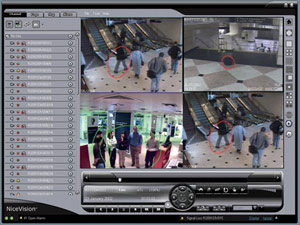
Liberty Island's video cameras all feed into a computer system. The park doesn't disclose details, but fully equipped, the system is capable of running software that analyzes the imagery and automatically alerts human overseers to any suspicious events. The software can spot when somebody abandons a bag or backpack. It has the ability to discern between ferryboats, which are allowed to approach the island, and private vessels, which are not. And it can count bodies, detecting if somebody is trying to stay on the island after closing, or assessing when people are grouped too tightly together, which might indicate a fight or gang activity. "A camera with artificial intelligence can be there 24/7, doesn't need a bathroom break, doesn't need a lunch break and doesn't go on vacation," says Ian Ehrenberg, former vice president of Nice Systems, the program's developer.

Most Americans would probably welcome such technology at what clearly is a marquee terrorist target. An ABC News/Washington Post poll in July 2007 found that 71 percent of Americans favor increased video surveillance. What people may not realize, however, is that advanced monitoring systems such as the one at the Statue of Liberty are proliferating around the country. High-profile national security efforts make the news—wiretapping phone conversations, Internet moni­toring—but state-of-the-art surveillance is increasingly being used in more every-day settings. By local police and businesses. In banks, schools and stores. There are an estimated 30 million surveillance cameras now deployed in the United States shooting 4 billion hours of footage a week.

Americans are being watched, all of us, almost everywhere.

We have arrived at a unique moment in the history of surveillance. The price of both megapixels and gigabytes has plummeted, making it possible to collect a previously unimaginable quantity and quality of data. Advances in processing power and software, meanwhile, are beginning to allow computers to surmount the greatest limitation of traditional surveillance—the ability of eyeballs to effectively observe the activity on dozens of video screens simultaneously. Computers can't do all the work by themselves, but they can expand the capabilities of humans exponentially.

Security expert Bruce Schneier says that it is naive to think that we can stop these technological advances, especially as they become more affordable and are hard-wired into everyday businesses. (I know of a local pizzeria that warns customers with a posted sign: "Stop stealing the spice shakers! We know who you are, we have 24-hour surveillance!") But it is also reckless to let the advances proceed without a discussion of safeguards against privacy abuses. "Society is fundamentally changing and we aren't having a conversation about it," Schneier says. "We are entering the era of wholesale surveillance."

Earlier this year, on a hot summer afternoon, I left my Brooklyn apartment to do some shoplifting.
I cruised the aisles of the neighborhood grocery store, a Pathmark, tossing items into my cart like a normal shopper would—Frosted Mini-Wheats, Pledge Wipes, a bag of carrots. Then I put them on the belt at checkout. My secret was on the lower level of the cart: a 12-pack of beer, concealed and undetectable. Or so I thought. Midway through checkout the cashier addressed me, no malice in her voice, but no doubt either. "Do you want to ring up that beer?"

My heist had been condoned by Pedro Ramos, Pathmark's vice president of loss prevention, though he didn't know precisely when or where I was going to attempt it. The beer was identified by an object-recognition scanner at ankle level—a LaneHawk, manufactured by Evolution Robotics—which prompted the cashier's question. Overhead, a camera recorded the incident and an alert was triggered in Ramos's office miles away on Staten Island. He immediately pulled up digital video and later relayed what he saw. "You concealed a 12-pack of Coronas on the bottom of the cart by strategically placing newspaper circulars so as to obstruct the view of the cashier."
Busted.

Pathmark uses StoreVision, a powerful video analytic and data-mining system. There are as many as 120 cameras in some stores, and employees with high-level security clearances can log on via the Web and see what any one of them is recording in real time. An executive on vacation in Brussels could spy on the frozen-food aisle in Brooklyn.

In 2006 theft and fraud cost American stores $41.6 billion, an all-time high. Employee theft accounted for nearly half of the total (shoplifting was only a third), so much of the surveillance aims to catch in-house crooks. If the cashier had given me the beer for free—employees often work with an outside accomplice—the system would know by automatically comparing what the video recorded with what the register logged. The technol­ogies employed by Pathmark don't stop crime but they make a dent; weekly losses are reduced by an average of 15 percent.
 
Pathmark archives every transaction of every customer, and the grocery chain is hardly alone. Amazon knows what you read; Netflix, your taste in movies. Search engines such as Google and Yahoo retain your queries for months, and can identify searches by IP address—sometimes by individual computer. Many corporations log your every transaction with a stated goal of reducing fraud and improving marketing efforts. Until fairly recently it was impractical to retain all this data. But now the low cost of digital storage—you can get a terabyte hard drive for less than $350—makes nearly limitless archiving possible.
So what's the problem? "The concern is that information collected for one purpose is used for something entirely different down the road," says Ari Schwartz, deputy director of the Center for Democracy and Technology, a Washington, D.C., think tank.
This may sound like a privacy wonk's paranoia. But examples abound. Take E-ZPass. Drivers signed up for the system to speed up toll collection. But 11 states now supply E-ZPass records—when and where a toll was paid, and by whom—in response to court orders in criminal cases. Seven of those states provide information in civil cases such as divorce, proving, for instance, that a husband who claimed he was at a meeting in Pennsylvania was actually heading to his lover's house in New Jersey. (New York divorce lawyer Jacalyn Barnett has called E-ZPass the "easy way to show you took the offramp to adultery.")

On a case-by-case basis, the collection of surveillance footage and customer data is usually justifiable and benign. But the totality of information being amassed combined with the relatively fluid flow of that data can be troubling. Corporations often share what they know about customers with government agencies and vice versa. AT&T, for example, is being sued by the Electronic Frontier Foundation, a San Francisco-based civil liberties group, for allowing the National Security Agency almost unlimited access to monitor customers' e-mails, phone calls and Internet browsing activity.
"We are heading toward a total surveillance society in which your every move, your every transaction, is duly registered and recorded by some computer," says Jay Stanley, a privacy expert with the American Civil Liberties Union.
In the late 18th century, English philosopher Jeremy Bentham dreamed up a new type of prison: the panopticon. It would be built so that guards could see all of the prisoners at all times without their knowing they were being watched, creating "the sentiment of an invisible omniscience," Bentham wrote. America is starting to resemble a giant panopticon, according to surveillance critics like Bob Barr, a former Republican congressman from Georgia. "Were Bentham alive today, he probably would be the most sought-after consultant on the planet," he recently wrote in a Washington Times op-ed.

One of the most popular new technologies in law enforcement is the license-plate reader, or LPR. The leading manufacturer is Remington-Elsag, based in Madison, N.C. Its Mobile Plate Hunter 900 consists of cameras mounted on the outside of a squad car and connected to a computer database in the vehicle. The plate hunter employs optical-character-recognition technology originally developed for high-speed mail sorting. LPRs automate the process of "running a plate" to check if a vehicle is stolen or if the driver has any outstanding warrants. The sensors work whether the police car is parked or doing 75 mph. An officer working the old-fashioned way might check a couple dozen plates a shift. The LPR can check 10,000.

New York's Long Beach Police Department is one of more than 200 agencies around the country that use LPRs, and I rode in a squad car with Sgt. Bill Dodge to see the technology at work. A computer screen mounted in front of the glovebox flashed black-and-white images of every photographed plate; low alarms, like the sounds of your character dying in an '80s video game, droned for the problem cars. Over the course of a couple of hours we didn't net any car thieves or kidnappers, but Dodge's LPR identified dozens of cars with suspended or revoked registrations. He said that the system doesn't violate anyone's privacy—"there's no magic technology that lets it see inside a garage"—and praised its fairness. "It doesn't matter if you're black, white, old, young, a man or a woman, the system cannot discriminate. It looks at everyone and everything."

In July, New York City officials unveiled the Lower Manhattan Security Initiative, modeled after London's "Ring of Steel," which will include license-plate readers, automated roadblocks and 3000 new surveillance cameras—adding to the 250 already in place. Chicago, meanwhile, which has 560 anti-crime cameras deployed on city streets, revealed plans in September to add a sophisticated IBM video analytic system that would automatically detect abandoned bags, suspicious behaviors (such as a vehicle repeatedly circling the Sears Tower) and vehicles sought by the police. Expanded surveillance is perhaps to be expected for these high-profile cities, but they're hardly alone.

Richmond, Calif.; Spokane, Wash.; and Greenville, N.C., are among the cities that have recently announced plans to add electronic spying eyes. According to iSuppli, a market research firm, the global surveillance-camera business is expected to grow from $4.9 billion in 2006 to $9 billion in 2011.


An investigator looking for a particular piece of video is like a researcher working in a library with a jumbled card catalog—or in books with no tables of contents. The solution of 3VR and other similar companies is software that automatically analyzes and tags video contents, from the colors and locations of cars to the characteristics of individual faces that pass before the lens. The goal is to allow rapid digital search; instead of functioning like a shoddy library, 3VR hopes to be "the Google of surveillance video," Russell says. "It took 1000 [British agents] six weeks to review all the video after July 7. Had 3VRs been in place, it might have taken a dozen or so agents a weekend," he claims.

 I recently spent a night at Chicago's Talbott Hotel, a luxurious small retreat where the staff addresses you by name and you have to clear a dozen pillows from the cushy king-size bed before lying down. The Talbott is surveilled by 70 cameras, which cover every public area of the hotel and feed into a 3VR system.

Troy Strand, general manager of the hotel, showed me a computer screen divided into 16 panes with different camera views. He looked up my check-in time and seconds later retrieved video of my arrival the previous day. There I was, towing my carry-on toward room 1504.

Strand found a few other shots showing me, then instructed the software to begin facial analysis. The system assessed the balance of light and dark areas of skin tone and hair and gauged the distance between my eyes, nose and mouth. Strand instructed the system to search for all recorded videos showing my face, and the computer retrieved several dozen faces, none of which was mine. There was a woman and a black man. But Strand went through a few pages of results, and I started to show up. When he clicked on any image, an associated video of me played—crossing the lobby to go to breakfast, chatting with the front-desk clerk.

So-called "facial profiling" has been surveillance's next big thing for nearly a decade, and it is only now showing tentative signs of feasibility. It's easy to see why people are seduced by the promise of this technology. Twelve bank companies employ 3VR systems at numerous locations, which build a facial template for every single person that enters any branch. If somebody cashes a check that is later determined to be stolen, the person's face can be flagged in the system, and the next time the con artist comes in, the system is supposed to alert the tellers.

For Strand, the security system's fancier features are just a bonus. The cameras are in plain sight, so he believes that would-be criminals and misbehaving employees are deterred. "You can't have security people on every floor monitoring every angle of the building," he says.
Behavioral analysis programs can learn "normal" human patterns in a location highlighting and logging behaviors of individuals who move or act in unusual ways.

There's a man in Salt Lake City who knows what I did last summer. Specifically, he knows what I did on Aug. 24, 2007. He knows that I checked my EarthLink e-mail at 1:25 pm, and then blew a half an hour on ESPN's Web site. He also knows that my wife, Anne, wanted new shoes, from Hush Puppies or DSW, and that she synced her electronic planner—"she has quite a busy schedule," the man noted—and downloaded some podcasts. We both printed out passes for free weeklong trials at 24 Hour Fitness, but instead of working out, apparently spent the evening watching a pay-per-view movie. It was Bridge to Terabithia or Zodiac, he thinks.

The man's name is Joe Wilkinson, and he works for Raytheon Oakley Systems. The company specializes in "insider risk management," which means dealing with the problem of employees who, whether through innocent accident or nefarious plot, do things they really shouldn't be doing at work. Oakley's software, developed for the U.S. government and now used by ten Fortune 100 companies, monitors computer use remotely and invisibly. Wilkinson had agreed to run a surveillance trial with me as the subject, and after accessing my computer via the Web, he installed an "agent" that regularly reported my activities back to him.

The modern desktop machine is a multimedia distraction monster: friend, lover, shopping mall, stereo, television, movie theater and adult video store are mere mouse clicks away. Raytheon Oakley's software caught me wasting valuable work time checking personal e-mails and reading digital camera reviews online. Companies are also concerned about hostile work environments caused by employees openly surfing porn in the office—conse-quently, my 10:14 am visit to a risqué site was duly noted. Employees also leak trade secrets. (Consider the case of DuPont chemist Gary Min, who, after accepting a job with a competitor in 2005, raided DuPont's electronic library for $400 million worth of technical documents. He was caught by the FBI last year.) If I had downloaded any large engineering drawings onto a removable hard drive, Oakley's software would have alerted Wilkinson. And employees bad-mouth the boss. I wrote an e-mail to Anne that mentioned my editor at Popular Mechanics, Glenn Derene. Wilkinson rigged the software to flag anything with Derene's name, and alarm bells rang. Sorry, Glenn.

Surveillance of this sort is common. A 2005 survey by the American Management Association and the ePolicy Institute found that 36 percent of companies monitor workers on a keystroke-by-keystroke basis; 55 percent review e-mail messages, and 76 percent monitor Web sites visited.

"Total Behavioral Visibility" is Raytheon Oakley's motto. The vice president of marketing, Tom Bennett, knows that some people fear workplace monitoring. But the technology has many positive aspects. "We are not Big Brother," he insists.

Employees are sometimes lazy or dishonest, but often they're simply careless. A parent who has to leave the office at midday to care for a sick child might copy sensitive company information onto a USB drive so that he can work at home. An account manager might carelessly send customer credit card numbers over an unsecured wireless network where they can be stolen. Bennett says that his company's software helps companies understand and improve how workers use their computers. The Oakley moni­toring application works like a TiVo, allowing an instant video replay: where you pointed the mouse, when you clicked, what you wrote. This can catch the guilty but also exonerate the innocent, because the replay puts your actions in context.

The debate over surveillance pits the tangible benefits of saving lives and dollars against the abstract ones of preserving privacy and freedom. To many people, the promise of increased security is worth the exchange. History shows that new technologies, once developed, are seldom abandoned, and the computer vision systems being adopted today are transforming America from a society that spies upon a small number of suspicious individuals to one that monitors everybody. The question arises:
Do people exercise their perfectly legal freedoms as freely when they know they're being watched?

As the ACLU's Stanley argues, "You need space in your life to live beyond the gaze of society."
Surveillance has become pervasive. It is also more enduring. As companies develop powerful archiving and search tools, your life will be accessible for years to come in rich multimedia records. The information about you may be collected for reasonable purposes—but as its life span increases, so too does the chance that it may fall into unscrupulous hands.

Several months after I stayed at the Talbott Hotel, Derene, my editor, called Troy Strand to ask if he still had the security camera images of me at the hotel. He did. My niece Emma's Statue of Liberty shots are probably stored on a computer, as are the records of all my Pathmark purchases. Ramos could query my shopping trip of, say, Jan. 13, 2005, and replay video keyed precisely to any part of the register tape—from the fifth item scanned, pork chops, to the tenth, broccoli. That's innocuous and even humorous on the surface, but the more I thought about the store's power, the more it disturbed me.

"I would never do that," Ramos assured me. "But I could."


Dennis Mancino HD View 360 OTC Capital Partners


source: popular mechanics http://www.popularmechanics.com/military/a2398/4236865/
 

Thursday, September 3, 2015

Why everyone is talking about wireless cameras


Nowadays, crime is increasing very fast in all over the world therefore most of the people are very alert about it. These people are using many security equipments like security cameras, door switches, monitors, window vibration detectors, sensors, motion detectors etc. These all security equipments are design and develop to protect home and business. But, security cameras are in lime light. There are many security cameras like wireless security camera, IP cameras, wired cameras and many others. Although wireless cameras are the best way to protect property and business. At this time, many people are using wireless cameras for home surveillance because these systems do not include any wire. However, wireless security cameras do not need wire but need battery, which makes the cameras truly wireless from top to bottom. These cameras are also known as wifi security cameras.
The wifi security camera systems are the latest innovation in camera system. There are many advantages to use wireless cameras. Wireless security cameras are CCTV closed-circuit television cameras, which transmits an audio and video signal to a wireless receiver by way of radio band. Wireless cameras are generally used in homes and are very easy to set-up and provide you the flexibility to change camera places without wires. Therefore, wifi camera systems include various options such as Infrared LED light, an outdoor camera system and night vision and help a security camera to go through the elements.
Features of wireless security cameras
There are some features of wireless security cameras that are beneficial and useful.
  • Wireless security cameras can be connected remotely by any smartphone and tablet device.
  • You can connect a Micro-SD card for storing snapshots and videos by Motion Detection triggered and PIR Sensor.
  • It provides Night Vision feature and IP66 Weather Resistant.
  • The wireless cameras allows for real-time, very reliable video security with no loss or delay.
Other than this, wireless security camera systems are becoming more popular in the market. It is a cost-effective technique to have a complete security system installed in home or business for a frequently less expensive cost. Wireless cameras are also best for homes or apartments. These security cameras function most excellent when there is a clear line of view between the camera and receiver. The wireless camera systems are very simple to fit in location with more flexibility and installation. These can be installed everywhere in the range of the ability of the wireless system. Mapping tools can be used to balance the tags with trace the position for all the capture things.
There are many different features in wired vs wireless security cameras so people can choose according to their requirements. Because, the bigger homes and business may require more composite solution, so they generally choose wired camera.

Dennis Mancino HD view 360


OTC Capital Partners

Friday, August 28, 2015

Why You Need a 960h cameras?

Why You Need a 960h cameras?

Security camera systemSecurity is an important part for everyone and people wants to secure their home and business with better technology. Security camera is one of the best technologies for secure your home and business. The 960H technology is one of the best analog technologies used by many people for security. 960H cameras are the top generation of high resolution and broad screen CCTV security cameras that support 960 pixels of horizontal resolution. 960H stand for the number of horizontal pixels in the CCD image sensor and top resolution accessible for analog CCTV. These cameras are the top choice to set up with a 960H CCTV DVR because they are able to video recording at 960H resolution (960 x 480 pixels) and take benefit of the cameras widescreen set-up. There are many 960 cameras available in the market and vital to know all things about the 960h cameras as well.
960H DVR must balance the 960h cameras to understand the high resolution video. The DVR records big images, which provides a bigger amount of image information. 960H makes a broad screen picture by default and the image does not require to be stretched with the purpose of well wide-screen TVs and monitors. 960H cameras and 960H DVRs are backwards friendly with high standard resolution cameras and DVRs as well. However, security cameras and security DVR should be 960h capable to get the better picture value and performance. 960H cameras give a high-quality picture on a standard resolution DVR but they will make even improved by a system that can maintain the complete image size.
Key points of 960H cameras
There are some key points of 960h security camera systems that are very useful and helpful for who need 960 cameras.
  • 960h provides high resolution and 800+ TVL cameras for superb video clarity and quality.
  • It provides app for iPhone, app for iPad and app for Android
  • You can view and record in broad screen with remote viewing on iPhone, iPad, and Android devices.
  • It includes 24 IR LEDs for Night Vision that automatically starts when they identify low lighting situation.
  • The 960h security cameras are the indoor and outdoor weatherproof cameras.
  • It provides simple backup and archiving using USB transfer.
Other than this, the 960h dvrs brings you the most modern and great iteration of primary additions in the high resolution CCTV business. The 960H DVR is able to manage the incredible compactness of detail which is provided in the 800+ TVL cameras. With the help of 960h dvr surveillance systems you can view 4 cameras at the same time on the DVR’s on screen display.
Therefore, CCTV Camera professional always suggests 960H cameras to the consumers because these work with all presented CCTV DVRs. However, to take benefit of the better image quality you need to use 960h DVR cameras that are available in the market now.

For more information visit: www.hdview360.com - Dennis Mancino

source: https://securitycamerasystems123.wordpress.com/2015/08/26/why-you-need-a-960h-cameras/

Monday, August 24, 2015

George Clooney and Wife Amal Alamuddin can Now Install Security Cameras in UK Property after Winning Case

 Security Cameras in the News.....


The court is on George Clooney and Wife Amal Alamuddin's side today as the court granted them the winning case. According to a previous report by hellomagazine.com, "George Clooney has won permission to install CCTV cameras around his country home in Sonning, Berkshire, despite concerns from neighbors'." The Grade II listed Aberlash House, in which the couple bought in October 2014, will now use an extensive CCTV system after the local council permitted his planning application.

The $10 million Sonning estate is located near and within the Thames River. The security system that the couple wanted to install has drawn the ire of the Eye and Dunsden Parish Council. The council believed that the cameras would be a "visual intrusion to people who are strolling next to a pretty riverbank" as stated in a previous report by designntrend.com.

The house is amazing to begin with. It has its own library, a gym, a spa and steam room.  There is more than meets the eye for this home as well. It features a cellar and a boathouse. Other features includes a separate cottage for the guests or staff. The land is also big in size. It is a colossal four acreage of land. It is surrounded by trees and beautiful gardens. The place offers privacy and luxury like no other. According to a previous report by designntrend.com

"Surrounded by dense, towering trees and weeping willows that droop lazily into the water, it comes with a fairly sturdy and undeniably picturesque, and the natural security system already in place makes it even more private."


The couple are planning to move in this estate soon which is why renovations and setting up were done in the property. According to a previous report by hellomagazine.com, "George and Amal are believed to have had a swimming pool and pool house added to the property, along with a large terrace and a private cinema."

Dennis Mancino HD View 360 www.hdview360.com

source: http://www.realtytoday.com/articles/29249/20150824/george-clooney-and-wife-amal-alamuddin-can-now-install-security-camera-in-uk-property-after-winning-the-case.htm